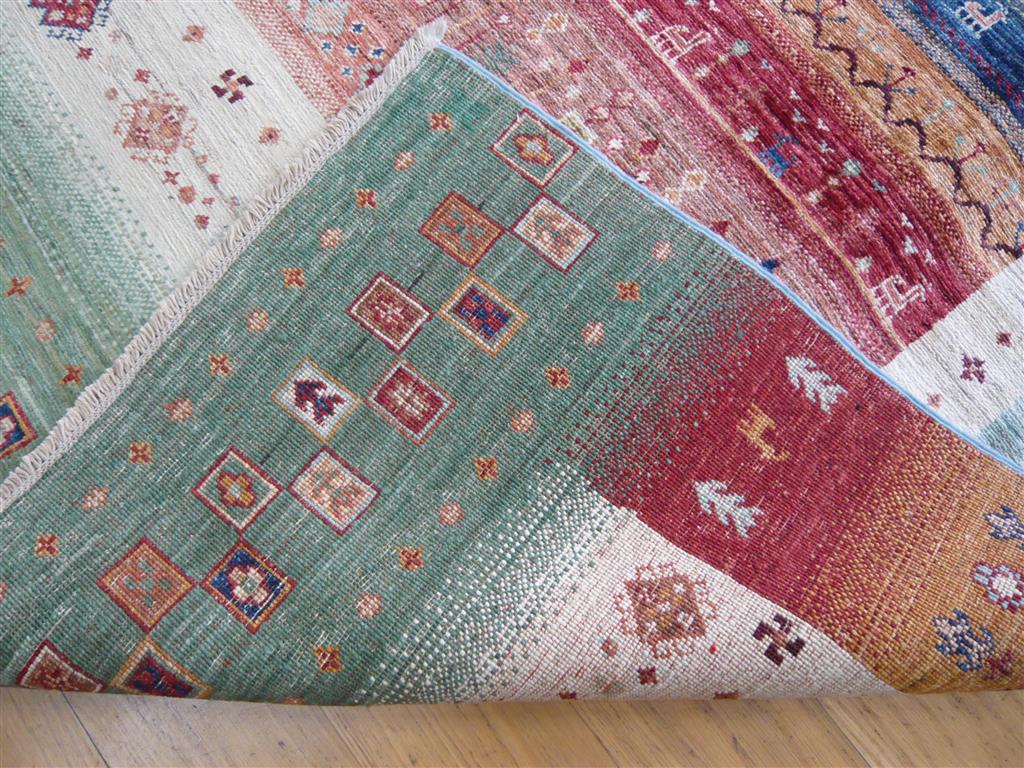
Geometric rug patterns are among the oldest and most recognisable designs in traditional weaving. Many of the rugs sourced by Oriental Rugs of Norwich feature bold shapes, stepped lines and repeated motifs that reflect centuries of cultural history across Afghanistan, Persia, India and Pakistan.
Origins of Geometric Design
Early nomadic weavers produced angular motifs due to the simple looms and tools available. Over time, these shapes became meaningful symbols that carried stories, beliefs and tribal identity. Today, geometric designs continue to be a hallmark of traditional craftsmanship and offer a strong link to heritage.
Common Symbols and Their Meanings
Diamonds
Diamonds often represent protection or the idea of an eye watching over the family home. This motif is seen throughout Persian and Afghan weaving traditions.
Stars and Crosses
These shapes can symbolise navigation, spirituality or unity. They frequently appear in Pakistani and Indian rugs that draw from tribal or village-based weaving cultures.
Trees and Animals
Stylised trees, birds and animals often express wishes for prosperity, growth or good fortune. These elements bring personality and narrative to the rug’s design.
Why Geometric Rugs Remain Popular
Geometric designs suit both classic and modern interiors. Their clean lines and structured forms create balance in a room, while the rich colours and textures of handmade rugs add character. They work especially well in larger spaces where the pattern can be fully appreciated.
If you are inspired by geometric designs, visit our showroom or browse our full range of traditional and contemporary oriental rugs to find a piece that complements your home.