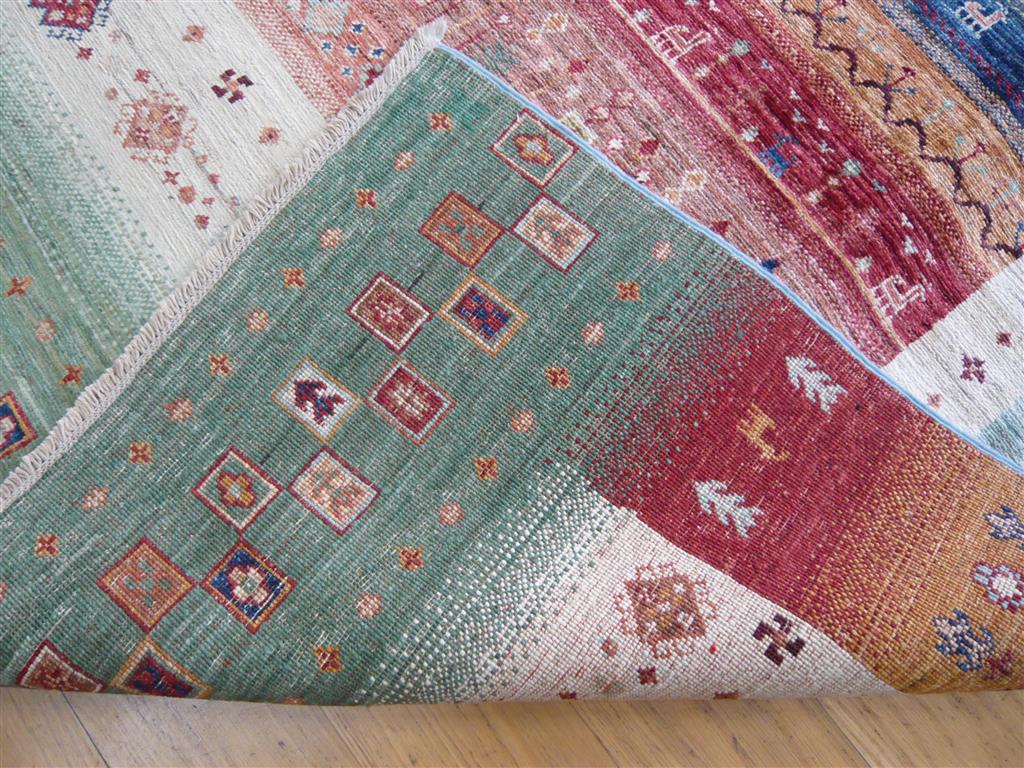
Tribal and city rugs represent two distinct traditions within the world of handmade rugs. While both are crafted by skilled weavers, they differ in purpose, style and construction. Understanding these differences helps buyers choose a rug that suits their taste and lifestyle.
Tribal Rugs
Tribal rugs are traditionally woven by nomadic or village-based communities. Designs are often bold, geometric and symbolic, reflecting cultural identity and storytelling. Colours are typically earthy and rich, and patterns may vary slightly within the same rug due to hand-spun wool and natural dyes.
Construction tends to be robust, making tribal rugs well suited to everyday living spaces. Each piece often has a strong sense of individuality.
City Rugs
City rugs are produced in established weaving centres with organised workshops. These rugs typically feature intricate floral patterns, curving lines and symmetrical layouts. Knot density is usually higher, allowing for fine detail and refined design.
City rugs are often woven with carefully selected materials and follow more formal design traditions. They are ideal for rooms where elegance and pattern clarity are desired.
Key Differences at a Glance
Tribal rugs prioritise expression and durability, while city rugs focus on precision and detail. Both offer craftsmanship and beauty, but their styles suit different interiors.
Choosing Between the Two
Those seeking character and texture may prefer tribal rugs, while those drawn to elegance and formality may favour city rugs. Understanding these traditions helps buyers select a rug that complements their home.
If you would like help choosing between a tribal or city rug, our team can explain the characteristics of each style and recommend suitable options.