Hand-knotted rugs are valued for their craftsmanship, durability and individuality. While they can appear similar to machine-made or hand-tufted rugs at first glance, there are clear structural differences that reveal how a rug has been made. Learning how to recognise these details allows owners to better understand and appreciate the rug they own.
Examining the Back of the Rug
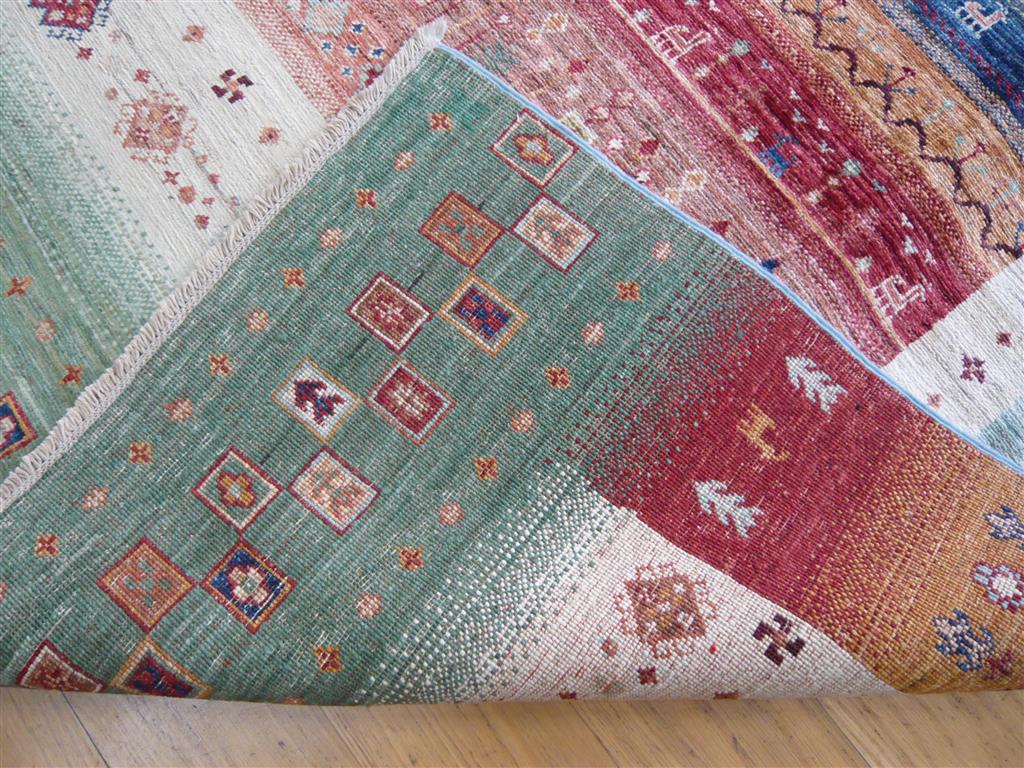
One of the most reliable ways to identify a hand-knotted rug is to turn it over and look at the reverse. In a hand-knotted rug, the design should be visible on the back, appearing as a slightly less defined version of the front pattern.
Knots may vary slightly in size and alignment, reflecting the handmade process. Perfect uniformity is rarely seen in genuine hand-knotted pieces.
Understanding Knot Structure
Hand-knotted rugs are made by tying individual knots around warp threads, one knot at a time. This creates a textured back where each knot can be felt when running a hand across the surface.
Machine-made rugs typically have a flat or latex-backed reverse, while hand-tufted rugs often show fabric backing used to hold the tufts in place.
Pattern Clarity and Design Transfer
In a hand-knotted rug, the design is created during the weaving process rather than printed or glued on. This means patterns often show slight irregularities and variation, particularly in curves or diagonal lines.
These variations are a natural result of hand craftsmanship and should be viewed as a sign of authenticity rather than imperfection.
Materials and Fibre Clues
Most hand-knotted rugs are made from natural materials such as wool, silk or cotton. Wool pile tends to feel resilient and slightly textured rather than overly soft or synthetic.
Fringes on hand-knotted rugs are an extension of the warp threads, meaning they are part of the rug’s structure rather than sewn on separately.
Weight, Flexibility and Handle
Hand-knotted rugs often feel heavier and more flexible than machine-made alternatives. When lifted, they tend to drape naturally rather than holding a rigid shape.
This flexibility reflects the way the rug has been constructed, with knots forming a dense but supple foundation.
Common Misconceptions
Not all rugs with visible knots are hand-knotted, and high knot counts alone do not guarantee quality. Similarly, some machine-made rugs are designed to imitate the appearance of handmade pieces.
Looking at multiple characteristics together provides a more reliable assessment than focusing on a single feature.
Why Identification Matters
Understanding whether a rug is hand-knotted helps owners appreciate its value, care for it appropriately and make informed decisions about cleaning or restoration.
It also builds confidence when buying or assessing handmade oriental rugs.
If you would like help identifying a rug or confirming its construction, our team is happy to offer guidance and share expertise based on close inspection and experience.