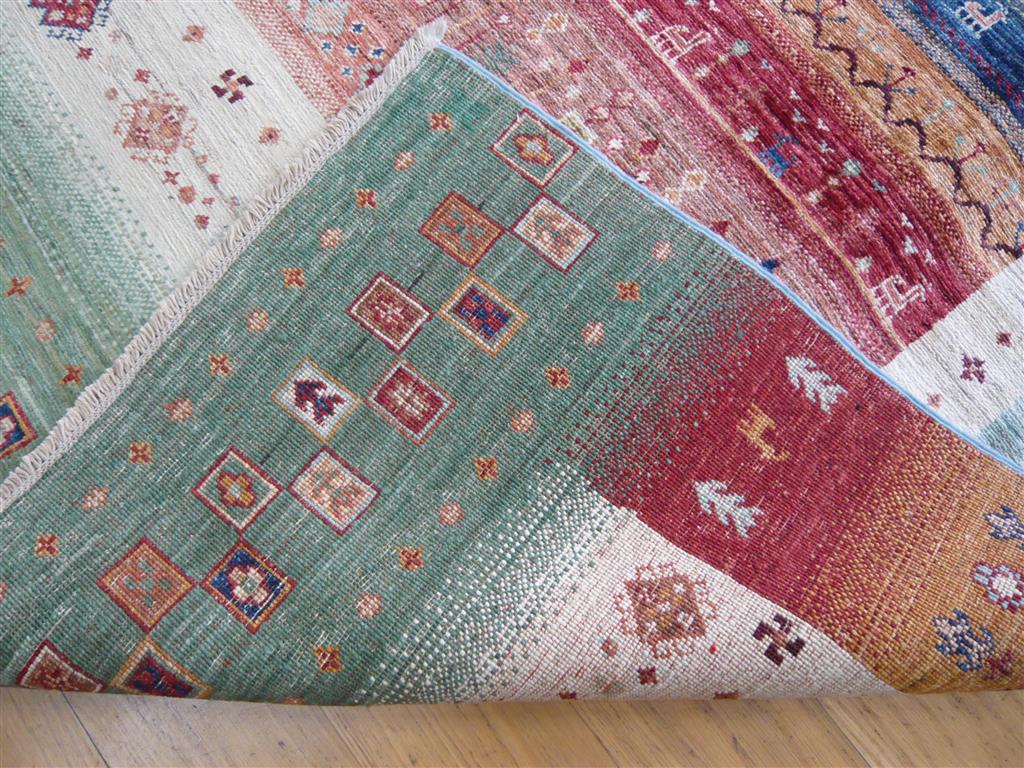
Hand-knotting is one of the most skilled and respected techniques in the rug-making world. Many rugs available at Oriental Rugs of Norwich are produced using traditional knotting methods that have been handed down through generations.
The Persian Knot
Also known as the Senneh knot, this asymmetrical knot allows weavers to achieve fine detail and smooth curves in the pattern. It is commonly used in Persian and some Indian weaving traditions.
The Turkish Knot
The Turkish knot, or Ghiordes knot, is symmetrical and creates a firm, durable structure. It is widely used in Afghan and Pakistani rugs, especially those with bold geometric patterns.
The Jufti Knot
The Jufti knot is tied more quickly and uses two warps instead of one. It is sometimes used in rugs designed to be decorative rather than highly detailed.
Knot Density
Knot density refers to the number of knots per square inch. Higher densities allow for intricate detail and produce a smoother surface. Lower densities create a more rustic texture and often contribute to a more relaxed, tribal look.
Choosing a Hand-Knotted Rug
A rug with a higher knot count is ideal if you want detailed patterns and refined craftsmanship, while lower-knot tribal pieces offer charm and durability. Understanding knot types helps buyers appreciate the skill and time involved in each rug.
If you would like help choosing a hand-knotted rug, our team can guide you through different knot types and styles to suit your home.